More and more organisations want to get serious about AI. Logical too. The number of valuable applications is growing rapidly, from generative AI to predictive models and smarter automation of processes.
Many companies are therefore starting pilots and experiments. This often quickly yields interesting results. But as soon as an AI solution has to go to production, things regularly go wrong.
Not because the model is not good enough, but because the underlying data platform is not set up for it. Gartner even states that through 2026, organisations are expected to abandon 60% of their AI projects if they are not supported by AI-ready data. In practice, we keep seeing the same bottlenecks recurring: data is scattered, the platform is mainly built for BI and reporting, governance falls short and experiments are disconnected from the rest of the landscape. As a result, AI remains stuck in loose prototypes, while scaling up fails to happen.
An AI-ready data platform therefore requires more than just additional tooling or access to a model. It requires a platform that supports AI workloads in a secure, manageable and repeatable way, from experiment to production.
In this blog, we will show you what makes a data platform AI-ready, where it differs from a traditional data platform and what questions you can ask to determine how far along your organisation is today.
A traditional data platform is usually set up for reporting, analysis and processing structured data. This makes it a strong foundation for BI and operational insights.
AI makes different demands. AI applications more often work with diverse data sources, require more room for experimentation and bring additional risks in terms of access, privacy and manageability. This makes not only the data itself important, but also the way you organise workloads and set up governance.
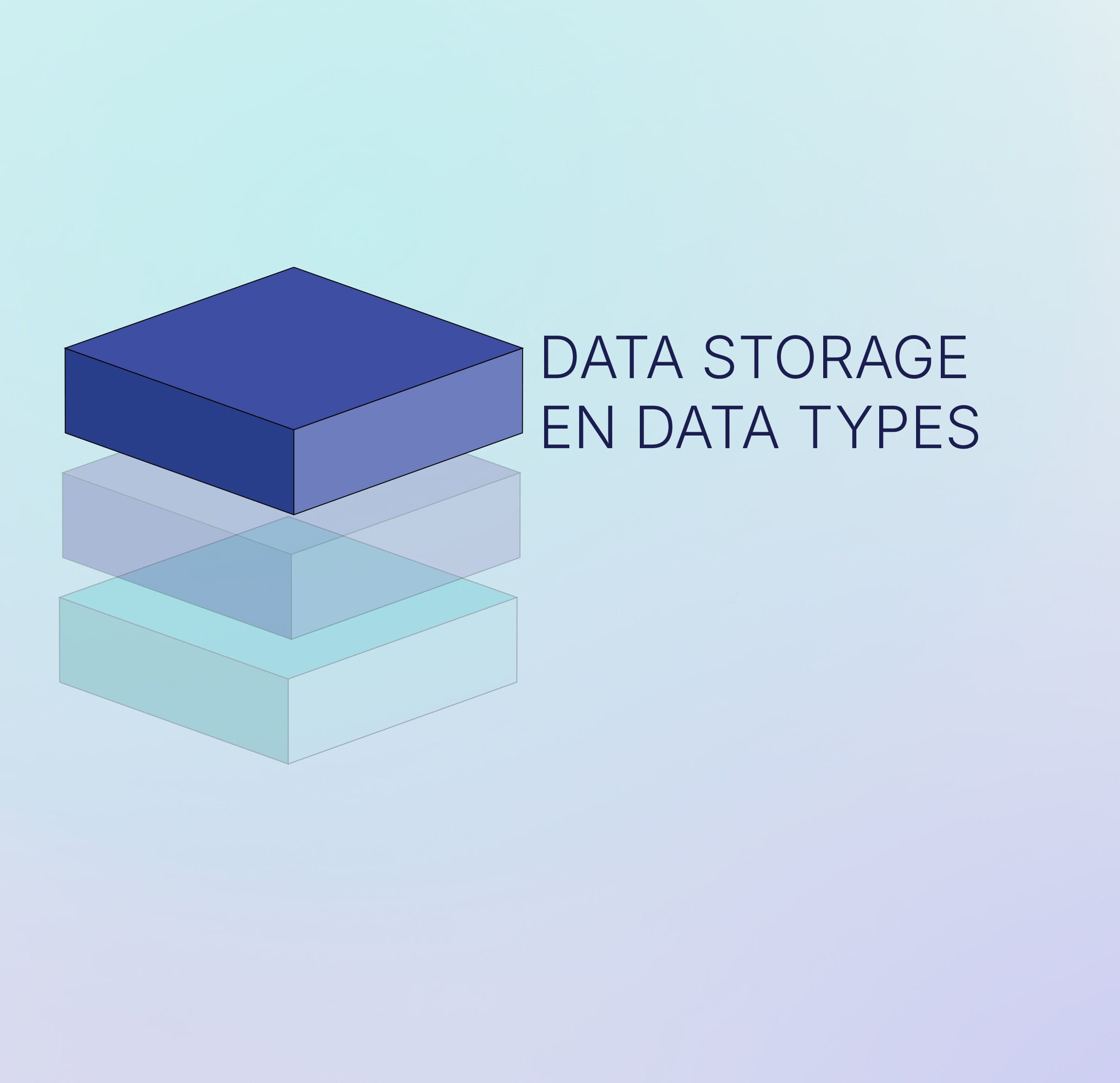
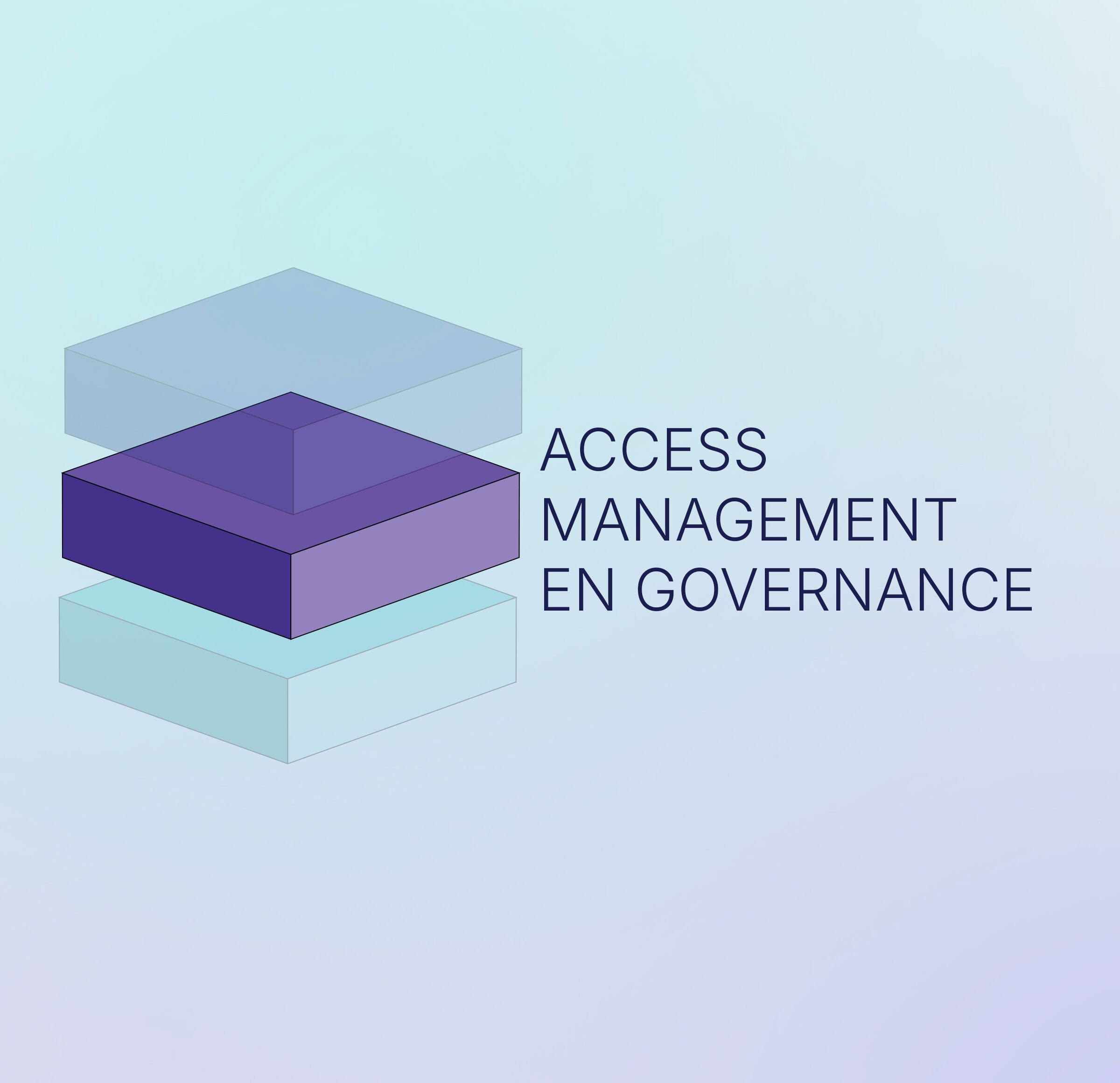
The difference between a traditional data platform and an AI-ready data platform therefore lies mainly in three things: usage, storage and governance.
Generative AI comes into its own especially when an organisation has a lot of unstructured information available, such as documents, manuals, procedures, notes or tickets, and employees want to quickly extract useful answers from it.
Think of a help desk department of a telecom provider. Over the years, experienced employees have accumulated documentation with common questions and corresponding solutions. This knowledge has become scattered across documents, folders and systems, making it difficult for new employees to quickly find the right answer.
With a GenAI solution, for example combined with retrieval over existing documentation, an employee can ask a question in natural language and immediately get back a relevant answer or document snippet. The value here is not only in generating text, but mainly in making existing knowledge accessible.
For the data platform, this means, among other things, that unstructured data must be unlocked, access rights must be properly enforced and it must be clear which sources are used in answering. Monitoring and cost control are also important, as LLM usage can quickly add up in cost.
Machine learning is suitable for issues where you want to recognise patterns in data to classify, predict or detect something. Think of churn prediction, demand forecasting, fraud detection or object recognition from camera images.
A practical example is a web shop in food supplements. Suppose you know which sport your customers play, because you ask them at checkout. At the same time, you collect behavioural data about their visit to the website, such as page views, click behaviour and time spent on certain product categories. Based on historical data, you can then develop a model that predicts what interest or sports profile a visitor is likely to have, even before that customer checks out.
Such a prediction helps to make content, navigation or product recommendations more relevant. The power of machine learning here is in recognising patterns that are not immediately visible to humans.
For this type of application, the platform should support at least the following:
Not every problem requires generative AI or machine learning. In many cases, data engineering, business intelligence or classical analytical solutions are simpler, more transparent and cost-efficient.
For example, do you want to gain insight into financial performance, operational KPIs or deviations in a process? Then a well-designed dashboard, a data model or a set of clear business rules is often a better solution than a black-box model. Especially in areas where explainability, traceability and control are important, a traditional data solution is often the wiser choice.
So an AI-ready data platform does not mean that every problem has to be solved with AI. Instead, it means that your platform offers room to make the right choice for each use case.

A traditional data platform is usually optimised for structured data in tables. Think transactions, customer data, orders and other data that fits well in a warehouse or lakehouse.
AI applications often require a broader palette of data. Generative AI, for instance, actually works a lot with unstructured sources such as documents, manuals, tickets, images or audio. In addition, GenAI often creates an extra storage layer for embeddings and vector indexes to retrieve information semantically. With ML, you want to be able to store and version training data, features and model artifacts.
So an AI-ready platform should not only store data, but also be able to manage different types of data and derived objects.

With a traditional data platform, governance often revolves around data quality, ownership, access management and definitions. For AI, this is not enough.
Once AI models generate answers or make predictions based on business data, it becomes important to know exactly what data was used, who had access to it and whether that complies with the rules. For GenAI, for example, that means you want to be able to retrace which documents or data sources were accessed. For ML, you want reproducibility, dataset versions and control of training and validation data. Logging, auditability and handling of sensitive data are also becoming more important.
Therefore, an AI-ready platform requires governance that goes beyond simply granting access. Access must also be fine-grained, explainable and auditable.

Traditional data platforms are usually set up for stable data flows: ingestion, transformation and availability for reporting. AI brings an additional layer of experimentation and operationalisation.
For ML, this includes space for training processes, experiment monitoring, model registry, validation, deployment and monitoring. For GenAI, it involves document processing, embedding processes, retrieval, model usage, prompt management and sometimes even agentic processes. These are different processes from a classic ETL pipeline, with different requirements for orchestration, observability and scalability.
On top of that, the step from experiment to production is often much larger with AI than with traditional data solutions. A notebook or loose pilot is quickly created, but a production solution requires monitoring, cost control, version control and clear CI/CD.
An AI-ready data platform does not mean simply adding more tooling to your existing landscape. It means that your platform is set up for different types of data, different workloads and tougher governance and manageability requirements.
Therein lies the difference between an interesting pilot and AI that delivers real value in production. Organisations that want to successfully deploy AI not only need strong models, but above all a platform that supports AI in a safe, scalable and manageable way. GenAI or ML is then not a loose addition on top of the platform, but a capability of the platform itself.
Blenddata helps organisations make their data platform AI-ready. From architecture choices and governance to implementation and operationalisation in production.
What we have done at DLL:
Contact us for an initial exploration.